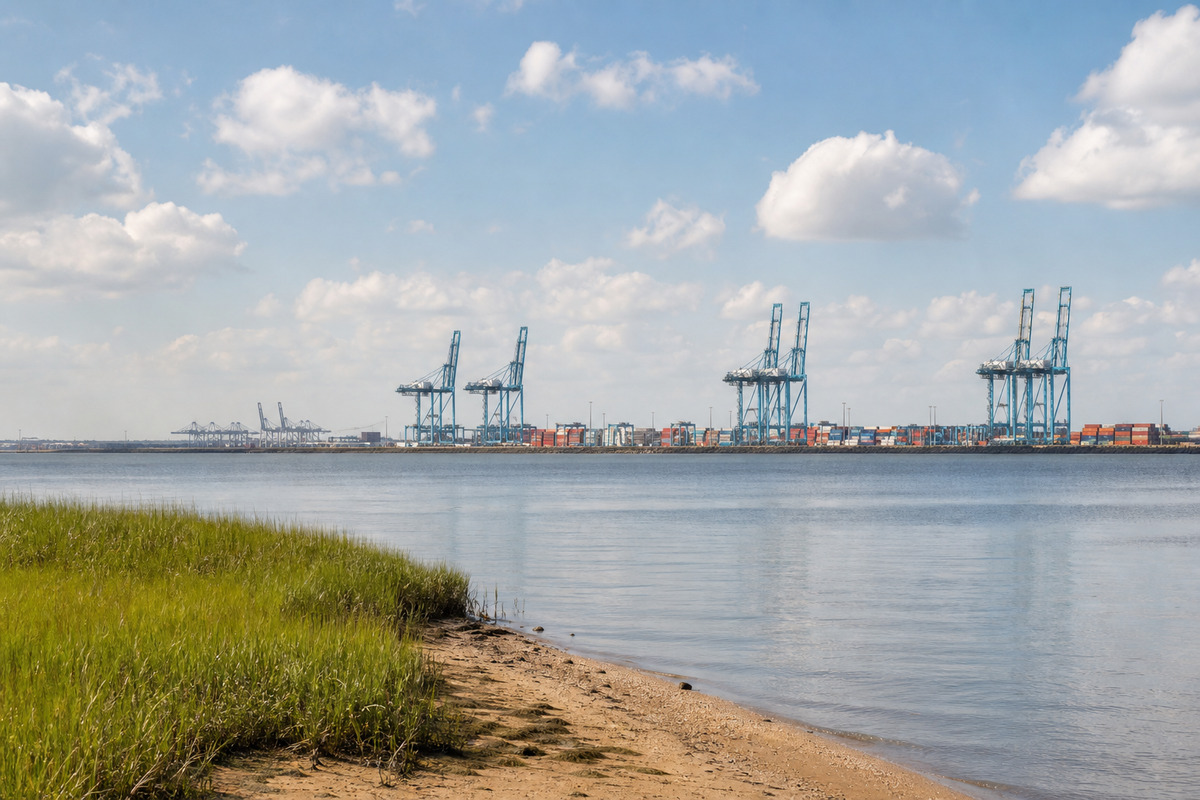
Hampton Roads and the Eastern Shore
The Seven Cities, the Peninsula and the Shore.
Hampton Roads is where the Virginia depot sits. The depot is a few miles from downtown Norfolk, which makes this a short haul. The delivery conditions here are water, sand and crossings rather than distance. Every route between the Southside and the Peninsula goes through a tunnel or over a bridge, so a run from Chesapeake to Hampton is planned around the Hampton Roads Bridge-Tunnel and the Monitor-Merrimac rather than around mileage. The ground is sandy loam over a high water table across most of the region. A container set straight onto turf will settle unevenly inside a season, so blocks or a compacted gravel pad under the corner castings help keep the doors swinging true. Older streets in Norfolk and Portsmouth are narrow and lined with parked cars. The low blocks near the water can hold standing water on a high tide, so it helps to know which side of the street drains better before the spot is picked. Out on the Eastern Shore the run crosses the Chesapeake Bay Bridge-Tunnel, which limits high-profile vehicles when the wind gets up, so a Shore delivery depends on the weather that morning.

Greater Richmond and the Tri-Cities
Richmond, the Tri-Cities and the river counties out to the Northern Neck. About ninety-six miles from the depot.
Richmond is a straight run up I-64 from the depot. Inside the city the constraint is the street rather than the yard. The Fan, Church Hill and Jackson Ward have short blocks, alleys, stretches of cobblestone and a heavy tree canopy, and a tilt bed truck needs the bed to rise, so the clear path overhead matters more than the width of the gate. Walk the route from the street to the drop spot and look up. Out in Henrico, Chesterfield and Hanover the lots open up and the ground turns to Piedmont red clay, which is firm when it is dry and greasy for a few days after a hard rain, so grade and drainage matter before a date is booked. South of the river the Tri-Cities of Petersburg, Colonial Heights and Hopewell carry industrial yards, contractor shops and freight operations on pavement that is already built for heavy trucks. Ashland has a rail line running right down the middle of town, so the approach is best planned on a side street rather than across the tracks at a busy hour. East and north of Richmond, US 360 and US 17 carry traffic out to Tappahannock, the Northern Neck and the Middle Peninsula, where the last mile can be a numbered secondary route that gives up its pavement somewhere along the way.
Northern Virginia
Northern Virginia from Old Town Alexandria out to Loudoun, Prince William and Fredericksburg.
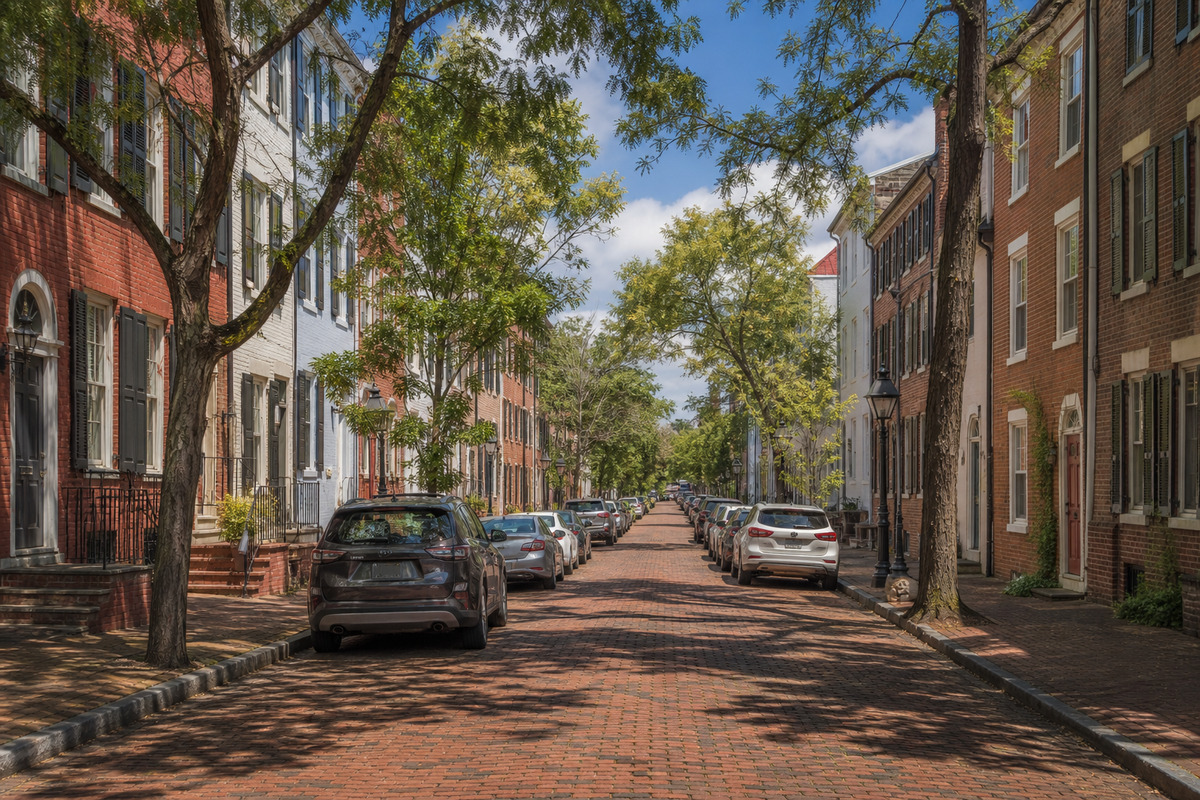
In Northern Virginia, the delivery window matters as much as the mileage. Inside the Beltway, Old Town Alexandria and Arlington have short blocks, brick streets, permit parking and alleys laid out long before anything the size of a tilt bed truck existed. The approach is worth walking before a delivery is booked, because a placement that works at seven in the morning can be impossible at four in the afternoon. The parkways along the river do not take commercial trucks, so routes here run on the Beltway, I-395, the Fairfax County Parkway and the Prince William Parkway instead, and that shapes the window more than distance does. Out in Loudoun and Prince William the work changes character. Data center construction around Ashburn and Sterling can have electrical and mechanical crews storing conduit, switchgear parts and tooling on site through long builds. Farther west toward Purcellville, Middleburg and The Plains the lots get large, and the drives get long and gravel on the horse and vineyard properties. One thing worth checking early in this region: neighborhoods inside associations may have their own rules about what can be parked or stored in view of the street, and reading the covenant before the truck rolls is worthwhile.
The Shenandoah Valley
The Valley along I-81 from Winchester down to Lexington. Poultry country, orchards and limestone ground.
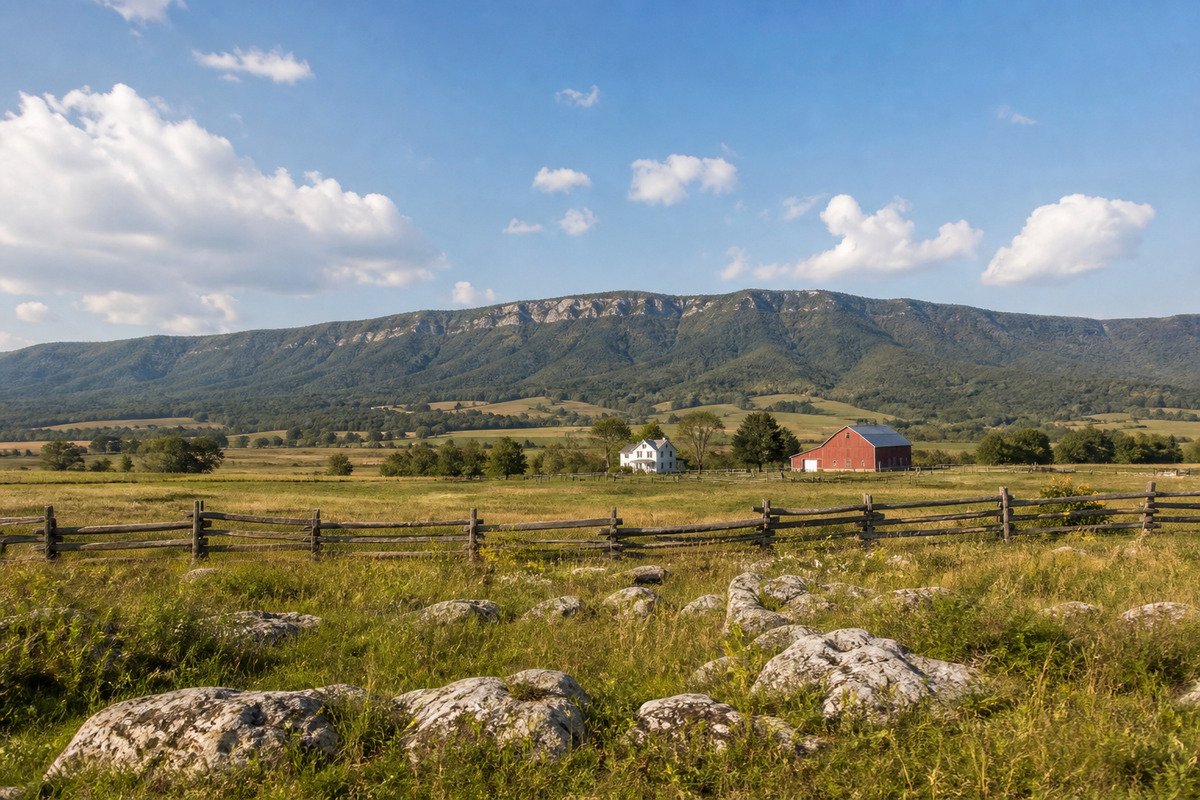
The Valley runs between Winchester and Lexington, and I-81 carries the freight. The everyday road is still US 11, the Valley Pike, which runs beside the interstate through every town on the way down. Two facts shape placement here. The first is limestone. Much of the Valley floor is karst, which means caves, springs and the occasional sinkhole sitting under ground that looks perfectly solid, so it helps to know whether the spot has held a loaded truck or a piece of equipment before. The second is the mountains on both sides. Skyline Drive and the Blue Ridge Parkway do not take commercial trucks, so getting over the ridge means a gap crossing on US 33 at Swift Run, US 211 at Thornton, or US 250 and I-64 at Afton Mountain, and that adds real miles to a run that looks short on a map. Poultry operations across Rockingham County around Broadway, Timberville, Dayton and Bridgewater can keep feed, bedding and equipment dry between houses. Orchards around Winchester can store bins, ladders and sprayers through the season. Winter matters more here than in Tidewater, because a north facing grade can hold ice after the rest of the county has thawed.
Central Virginia and the Southside
Charlottesville and Lynchburg down through the tobacco and timber counties to the Carolina line.
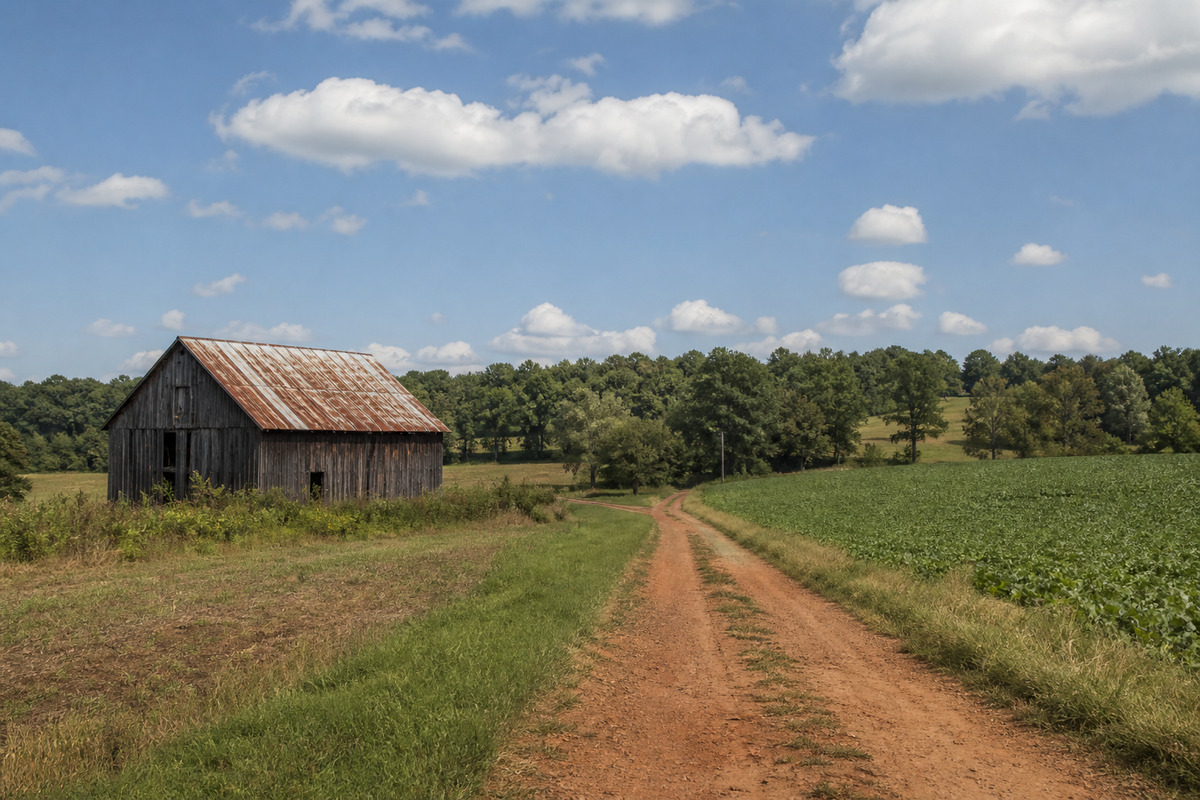
Central Virginia and the Southside are longer runs than the metros, so timing is planned after payment, address and access are reviewed. US 29 is the spine, carrying everything from Culpeper down through Charlottesville and Lynchburg to Danville. Around Charlottesville the delivery conditions split three ways. University move-in and move-out seasons fall in late summer and early May. Properties out in Albemarle, Greene, Nelson and Fluvanna counties can be at the end of a long gravel drive with a switchback and a low water bridge in the middle of it, so check the last half mile before you order. South and east of there the country opens into tobacco, timber and row crop ground through Prince Edward, Charlotte, Halifax, Lunenburg and Mecklenburg counties, where the question is whether a field road has had a week to dry out. Danville, Martinsville and South Boston carry an industrial base with yards already built for heavy trucks.
The Roanoke Valley and Southwest Virginia
Roanoke and Salem, the New River Valley, and the mountain counties out to Cumberland Gap. A long run from the depot.
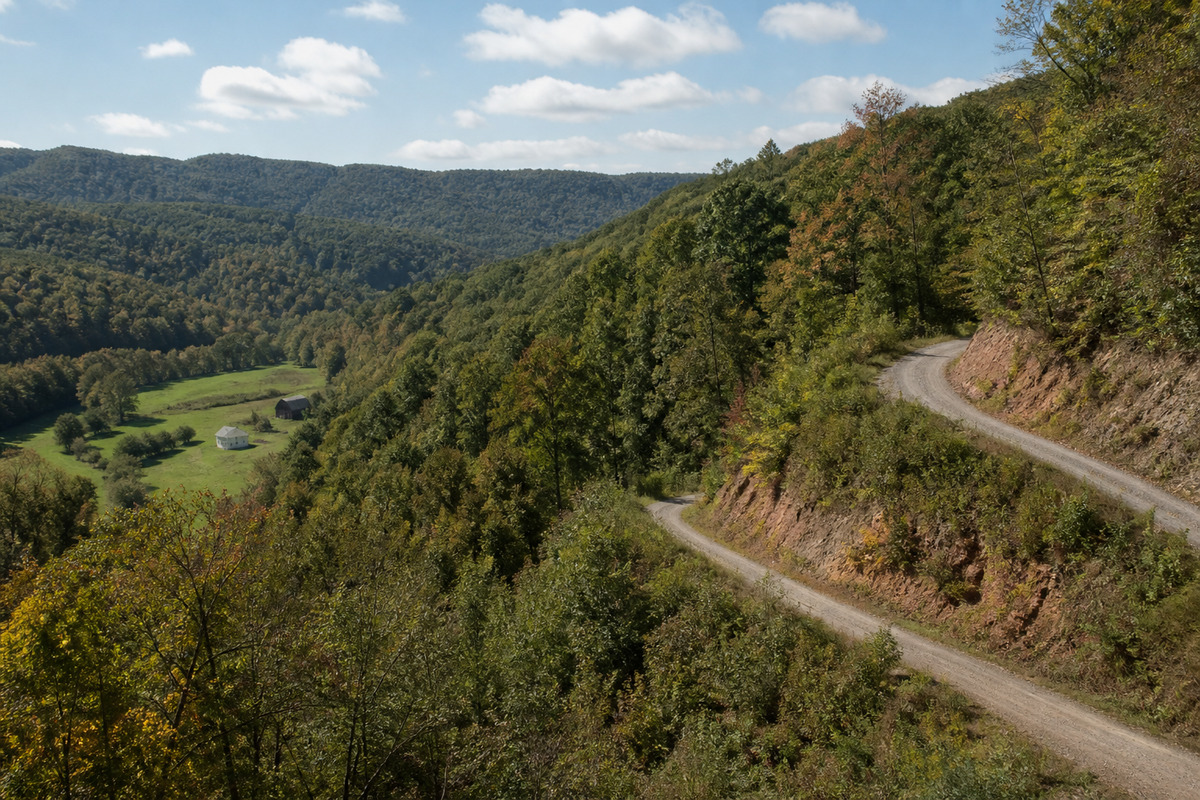
I-81 and I-77 carry the through traffic, including the tunnels at Big Walker Mountain and East River Mountain, and US 58 runs the entire southern border out to Cumberland Gap. Off those roads the ground rises steeply. A place up a hollow is reached by a narrow numbered secondary route with switchbacks, a creek crossing and nowhere to turn a truck around, and a tilt bed delivery needs 130 feet of straight, reasonably level run to slide a 40ft box off, 110 feet for a 20ft. Two 20ft containers can solve a site that will not take a 40ft. Smith Mountain Lake lots are steep with the usable ground at the bottom, so the turnaround needs to be worked out before anything is scheduled. In the coalfield counties the equipment yards and haul roads are already built for weight.